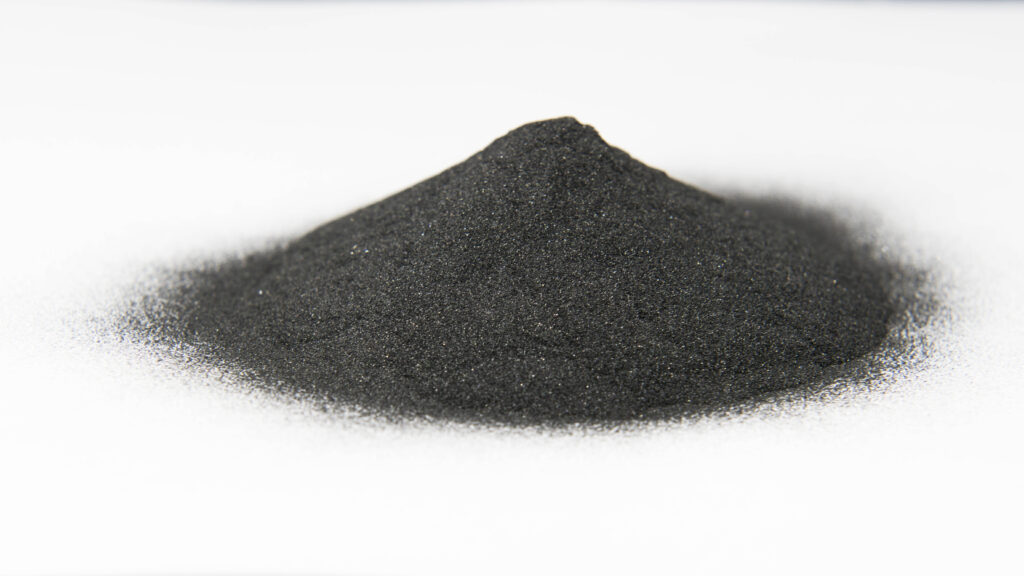


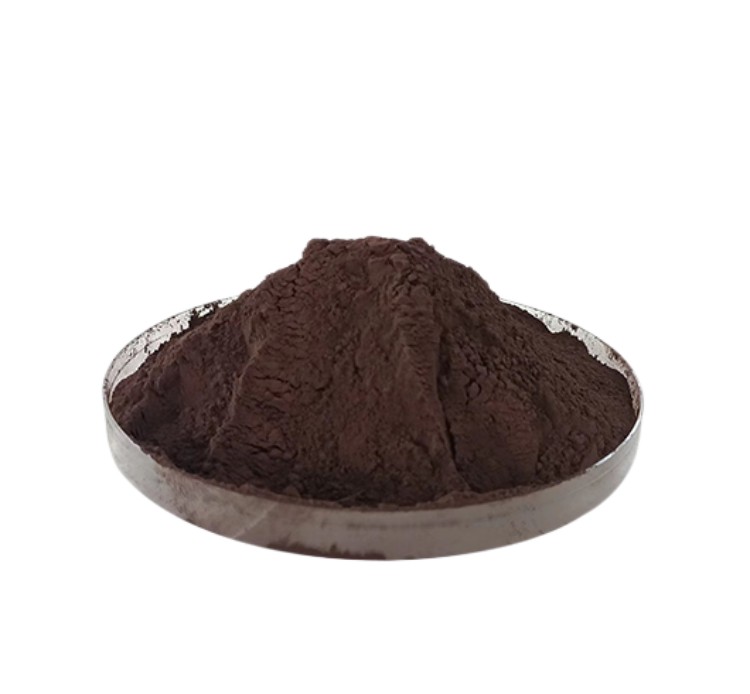
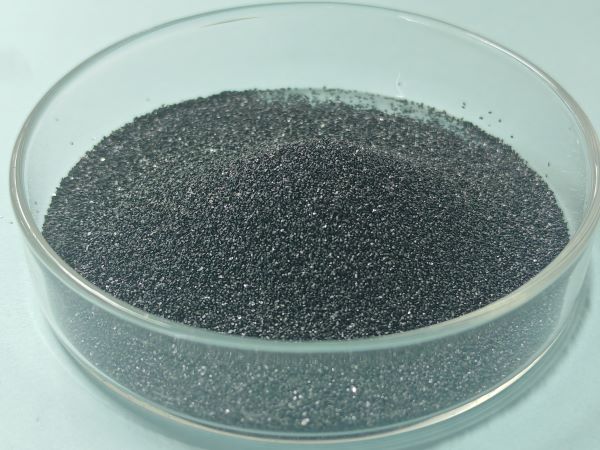
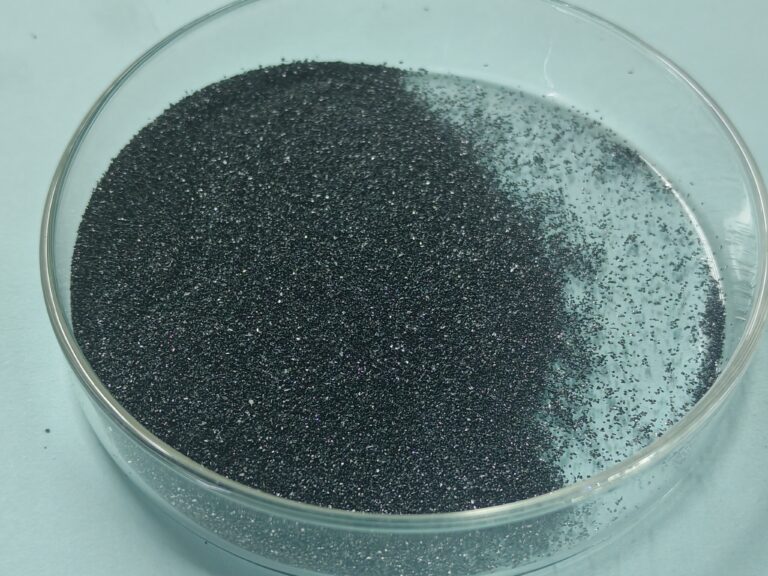
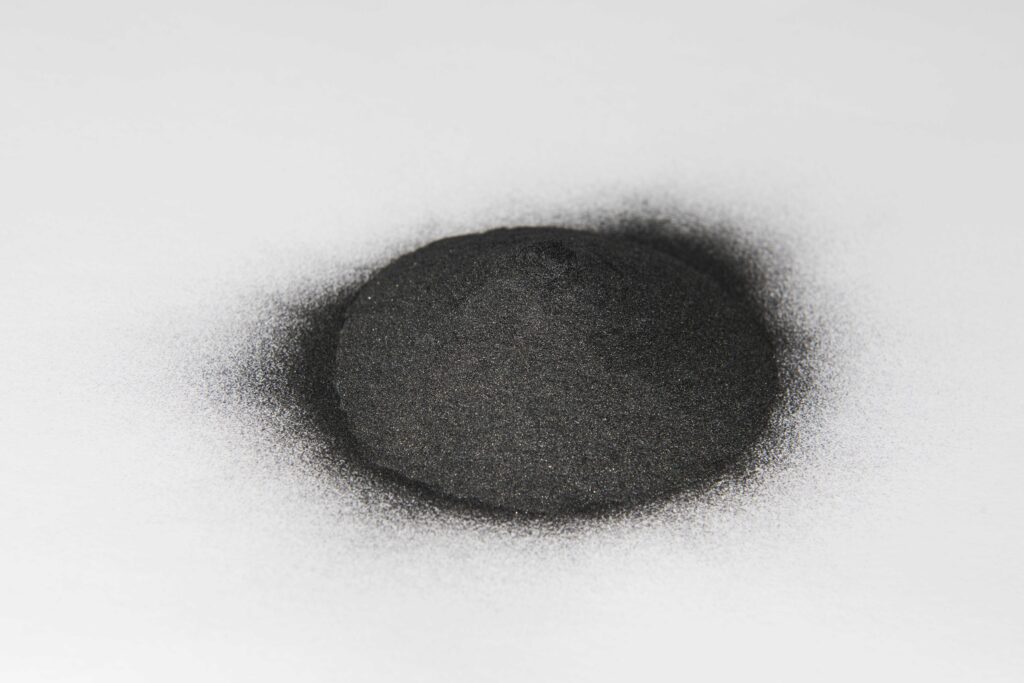
Boron carbide, chemically marked as B₄C and nicknamed “black diamond”, is an ultra-hard covalent ceramic material formed by boron and carbon atoms with a unique rhombohedral crystal structure. Discovered in the 19th century and mass-produced via carbothermal reduction in electric arc furnaces, it appears as black crystalline powder with subtle metallic luster, standing as the third hardest artificial material after diamond and cubic boron nitride, with a Mohs hardness of 9.3–9.5 and Vickers hardness over 30 GPa. This rare combination of extreme hardness, low density and outstanding chemical stability makes it irreplaceable across high-end industrial sectors.
Its physical and chemical advantages lay a solid foundation for diversified applications. It owns a low density of only 2.52 g/cm³, far lighter than most metal and ceramic abrasives, paired with a high melting point of 2350°C and ultra-low thermal expansion coefficient, delivering stable performance under drastic temperature changes. Chemically inert against most acids, alkalis and corrosive solvents at room temperature, it resists oxidation below 1000°C without reacting with common industrial mediums. Another distinctive trait is its powerful thermal neutron absorption capacity, which enables safe nuclear radiation shielding without generating long-lived radioactive waste. Unlike silicon carbide or white fused alumina, boron carbide maintains sharp cutting edges continuously during grinding, featuring superior self-sharpening performance and higher processing efficiency.
As a premium superabrasive, boron carbide powder dominates precision lapping and polishing scenarios for hard-to-machine workpieces. It is widely adopted for fine finishing of tungsten carbide tools, zirconia fiber ferrules, optical sapphire lenses, advanced ceramics and synthetic gemstones3M. Uniform particle grades from coarse grit to ultra-fine micropowder meet different processing demands: coarse grains remove thick machining traces rapidly, while micron-level powder delivers mirror surfaces without scratches, ideal for optical communication and semiconductor component superfinishing. Besides lapping powder, sintered boron carbide blanks are manufactured into long-service waterjet cutting nozzles and sandblasting nozzles, whose wear resistance outperforms tungsten carbide by multiple times and cuts maintenance costs for metal processing factories.
Beyond abrasive fields, boron carbide expands into military, nuclear and high-temperature refractory industries. Its high hardness-to-weight ratio makes it a core raw material for lightweight ballistic armor and bulletproof panels, effectively blocking impact energy while reducing equipment weight. In nuclear power plants, granular boron carbide serves as reactor control rods and shielding blocks to absorb excess neutrons and guarantee operational safety. Added into refractory castables and high-temperature coating formulas, it improves anti-erosion and wear resistance of furnace linings for metallurgy and glass production lines. It also acts as functional filler for wear-resistant composite coatings and thermal insulation materials, lifting the hardness and thermal stability of finished products.
Manufacturers provide boron carbide products with varied purity and particle sizes to match global industrial standards. High-purity grades pass RoHS compliance tests with undetectable heavy metal residues, suitable for export-oriented electronic and optical manufacturing. Whether used for precision grinding, wear-resistant spare parts, nuclear shielding or high-temperature refractories, boron carbide provides a high-performance, cost-effective solution for extreme working conditions, and remains an essential advanced ceramic material in modern precision manufacturing and new energy industries.