

Boron Carbide F240 F320 F360 For B4C Ceramic
Boron Carbide F240 F320 F360 For B4C Ceramic
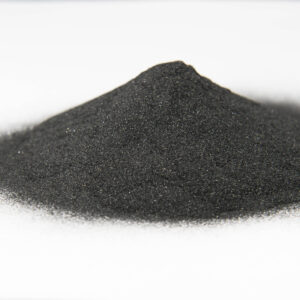
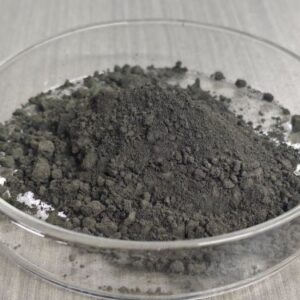
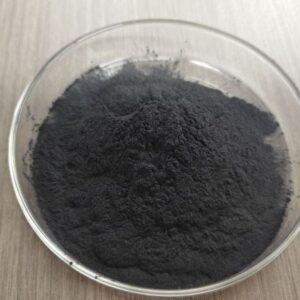
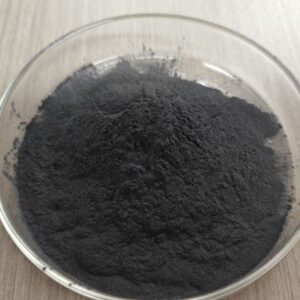
Boron Carbide F240, F320 and F360 graded grits are professional multi-size functional raw materials exclusively developed for high-purity B4C ceramic sintering and advanced ceramic component manufacturing. As one of the hardest man-made ceramic materials, boron carbide features extreme hardness, low density, excellent wear resistance, high temperature stability and outstanding chemical inertness. The combined three mesh specifications cover coarse, medium and fine particle gradation, perfectly solving the structural density and performance uniformity problems of single-size boron carbide ceramics, widely used for producing ballistic ceramic tiles, wear-resistant ceramic parts, high-temperature structural ceramics and industrial corrosion-resistant ceramic components.
$19,000.00 – $22,000.00 / MT
Description
Boron Carbide F240 F320 F360 For B4C Ceramic
Boron Carbide F240, F320 and F360 graded grits are professional multi-size functional raw materials exclusively developed for high-purity B4C ceramic sintering and advanced ceramic component manufacturing. As one of the hardest man-made ceramic materials, boron carbide features extreme hardness, low density, excellent wear resistance, high temperature stability and outstanding chemical inertness. The combined three mesh specifications cover coarse, medium and fine particle gradation, perfectly solving the structural density and performance uniformity problems of single-size boron carbide ceramics, widely used for producing ballistic ceramic tiles, wear-resistant ceramic parts, high-temperature structural ceramics and industrial corrosion-resistant ceramic components.
Our B4C ceramic-grade grit series including F240, F320 and F360 is produced from high-purity boron carbide ingots through precise crushing, shaping, impurity removal and strict F-standard particle classification. All specifications feature centralized particle size distribution, no oversize particles, uniform angular morphology and ultra-low impurity content, completely meeting the strict raw material standards of high-density ceramic sintering. Compared with single-mesh boron carbide powder, the matched grading of the three specifications optimizes particle stacking structure, effectively filling internal gaps of ceramic blanks and greatly improving the compactness and structural uniformity of sintered finished products.
Each mesh grade has a targeted functional positioning in B4C ceramic manufacturing. F240 coarse grit forms a stable rigid skeleton for ceramic blanks, ensuring excellent structural strength and impact resistance of sintered ceramics; F320 medium grit acts as transitional filler to optimize internal particle matching and improve the overall stress uniformity of ceramic components; F360 fine grit fills tiny micropores between coarse and medium particles, eliminating pores, cracks and other structural defects. The scientific gradation significantly enhances the ceramic’s hardness, compression resistance, wear resistance and overall structural stability.
This full-series ceramic-specific boron carbide grit differs from ordinary abrasive-grade B4C. It boasts stable high-temperature resistance, excellent thermal shock resistance and ultra-low shrinkage rate during high-temperature sintering. It is perfectly compatible with hot pressing sintering, atmospheric sintering and composite molding processes. The sintered B4C ceramics have dense texture, stable dimensional accuracy, strong corrosion resistance and long service life, suitable for manufacturing high-performance ballistic ceramics, mechanical wear-resistant ceramics and high-temperature resistant structural components.
TYPICAL CHEMICAL ANALISIS [%]:
| Size-Grit | Approx Size(microns) | B% | C% | Fe2O3 | B+C% |
| F60 | 300-250 | 78-81 | 17-22 | 0.2-0.4 | 97-99 |
| F80 | 212-180 | 78-81 | 17-22 | 0.2-0.4 | 97-99 |
| F100 | 150-125 | 78-81 | 17-22 | 0.2-0.4 | 97-99 |
| F120 | 125-106 | 78-80 | 17-22 | 0.2-0.4 | 96-98 |
| F150 | 106-75 | 78-80 | 17-22 | 0.2-0.4 | 96-98 |
| F180 | 75-63 | 78-80 | 17-22 | 0.2-0.4 | 96-98 |
| F230 | 53.0±3.0um | 77-80 | 17-22 | 0.3-0.5 | 96-97 |
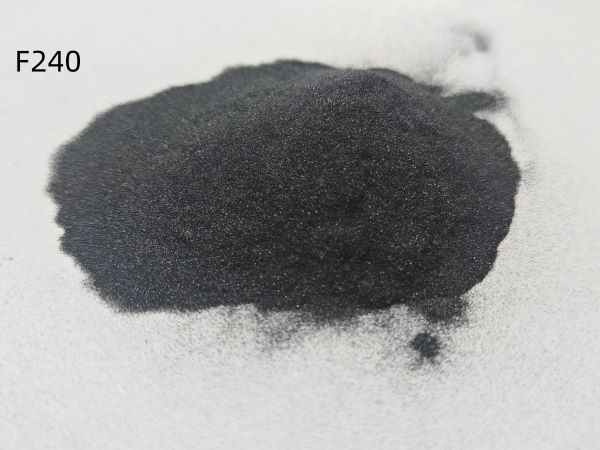
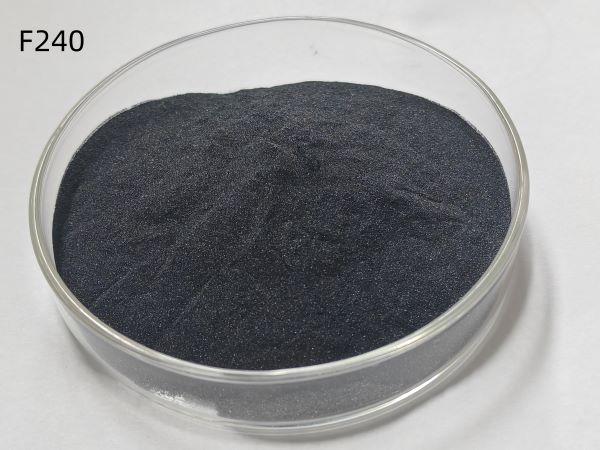
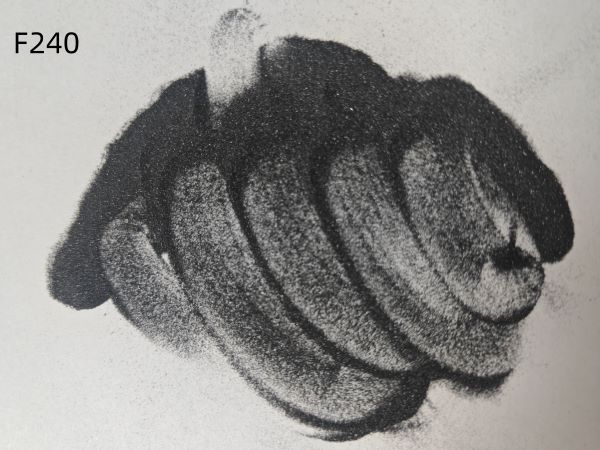
| F240 | 44.5±2.0um | 77-80 | 17-22 | 0.3-0.5 | 96-97 |
| F280 | 36.5±1.5um | 77-80 | 17-22 | 0.3-0.5 | 96-97 |
| F320 | 29.2±1.5um | 76-79 | 17-21 | 0.3-0.6 | 95-97 |
| F360 | 22.8±1.5um | 76-79 | 17-21 | 0.3-0.6 | 95-97 |
| F400 | 17.3±1.0um | 75-79 | 17-21 | 0.4-0.8 | 94-96 |
| F500 | 12.8±1.0um | 76-79 | 18-22 | 0.3-0.7 | 94-97 |
| F600 | 9.3±1.0um | 74-78 | 17-21 | 0.4-0.9 | 92-94 |
| F800 | 6.5±1.0um | 74-78 | 17-21 | 0.4-0.9 | 92-94 |
| F1000 | 4.5±0.8um | 75-78 | 18-22 | 0.1-0.8 | 90-94 |
| F1200 | 3.0±0.5um | 75-78 | 18-22 | 0.1-0.8 | 90-94 |
| F1500 | 2.0±0.4um | 75-78 | 18-22 | 0.1-0.8 | 90-94 |
| F2000 | 1.2±0.3um | 75-78 | 18-22 | 0.1-0.8 | 90-94 |
| -325 | -45um | 75-80 | 17-21 | 0.1-0.5 | 95-97 |
PHYSICAL PROPERTIES
| Molecular Weight (g/mol.) | Theoretical Density (g/cm3) | Melting Point (°C) | Boiling Point (°C) |
| 55.25515 | 2.52 | 2450-2723 | 3500 |
| Specific Heat (cal-mol-c) | Specific Gravity | Knoop Hardness | Crystallography |
| 12.5 | 2.51 | 2750 | Mono-crystalline |